

Clean Renewable Energy for Agricultural Irrigation
Agricultural operations often face high electricity costs and unstable power supplies. Because water pumps can represent a significant share of farm electricity use, photovoltaic generation and energy storage can provide an alternative power configuration.
Start with the pumping requirement
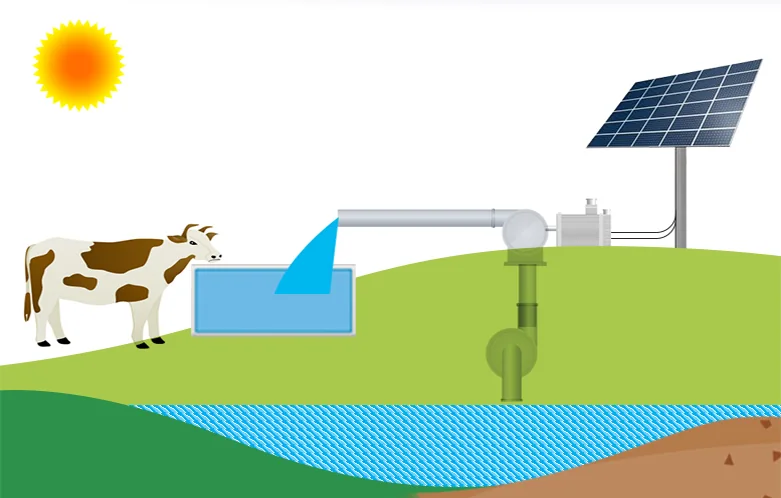
Solar water pumps can support drinking-water supply, livestock watering, irrigation and other remote applications. The system should first be sized around the required water volume, pumping height and operating schedule.
Configure the energy system
The basic system includes photovoltaic panels to generate electricity, batteries to store energy, a pump to move water and a tank to hold the pumped water. The components should be selected and connected for the site’s required power, flow and storage capacity.
Match generation with water demand
Water demand is often greatest on hot, sunny days, when photovoltaic output is also high. The pump can fill the tank during daylight hours, while batteries can retain excess energy for pumping at night or during cloudy weather.
For remote sites, this configuration can improve water-supply reliability while reducing reliance on grid electricity or fuel-based generation. Final equipment selection should be based on a site-specific load and hydraulic assessment.