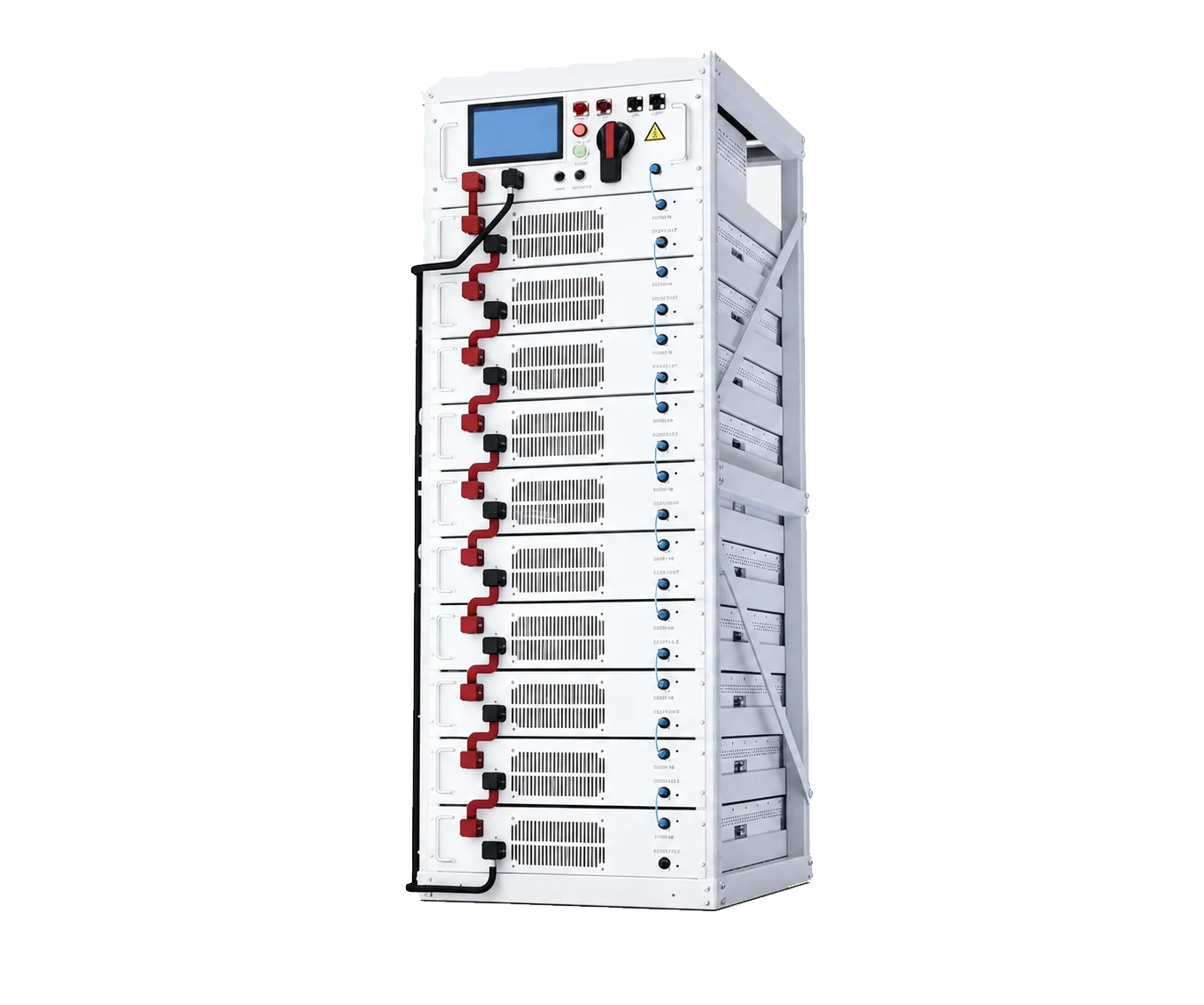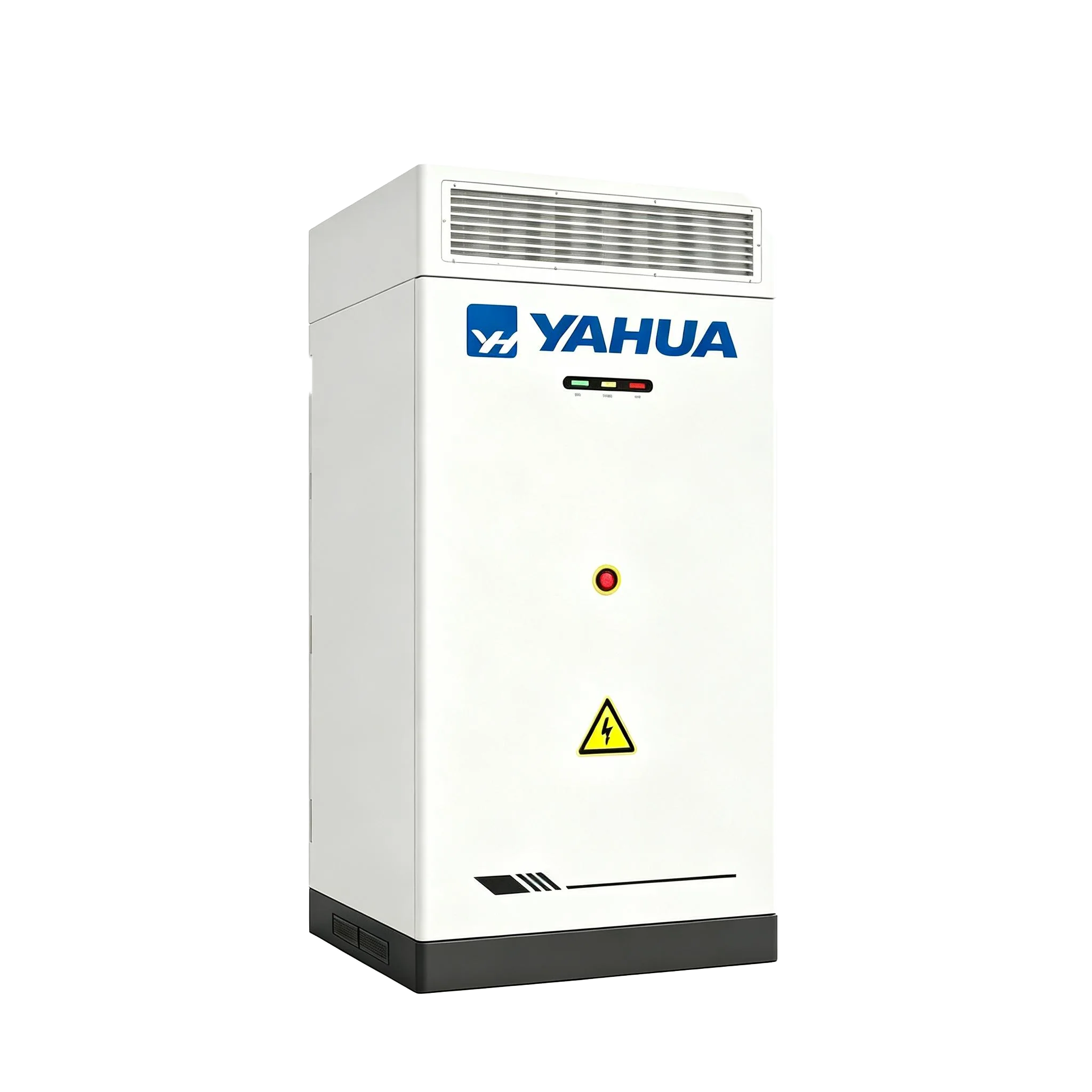

HVB-61K and HVB-100K
Rack-Mounted High-Voltage Batteries
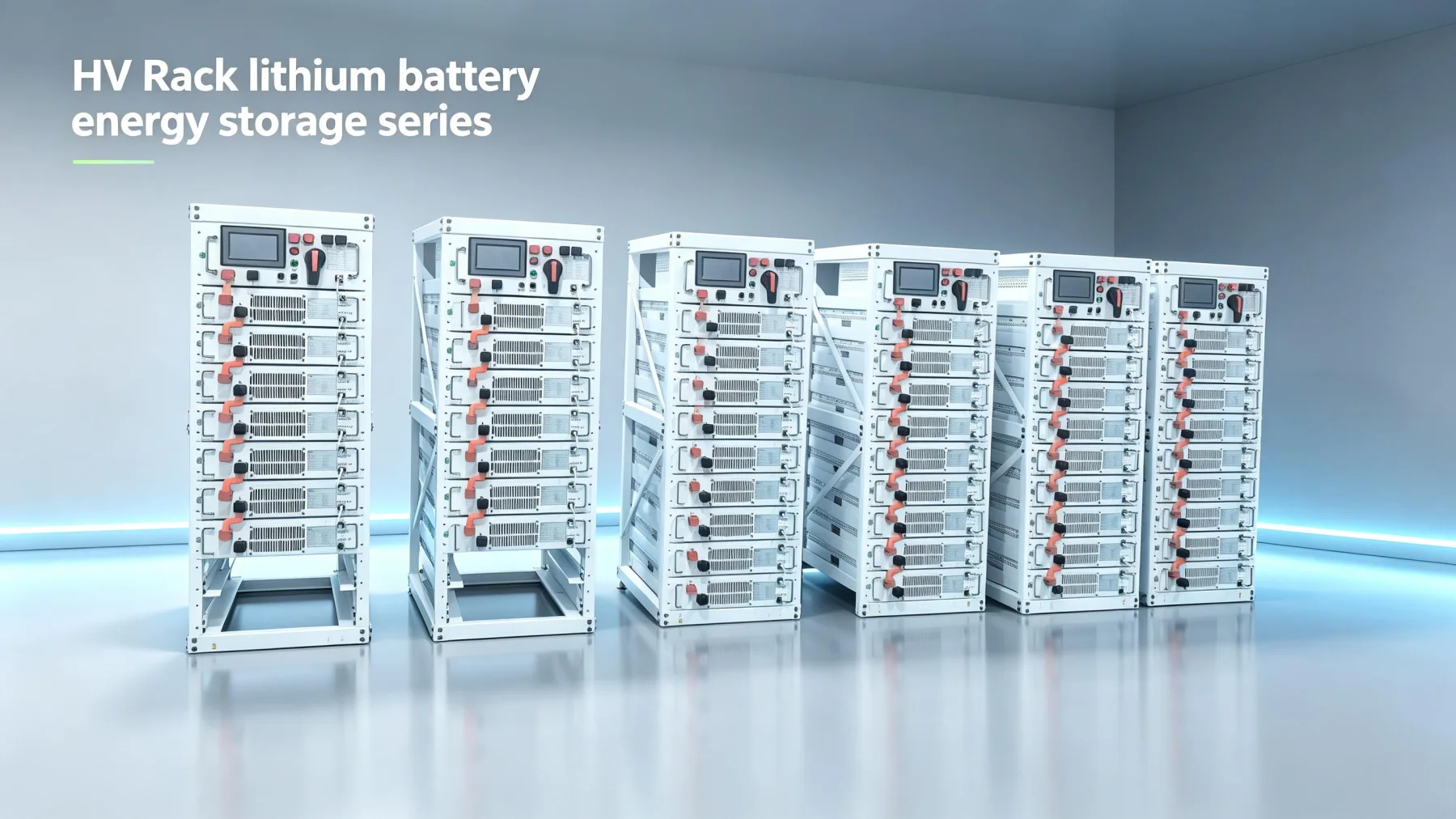
Removable rack-mounted LiFePO4 battery systems for residential, small-commercial and industrial integration, with five configurations from 40.96 to 102.4 kWh per cluster.
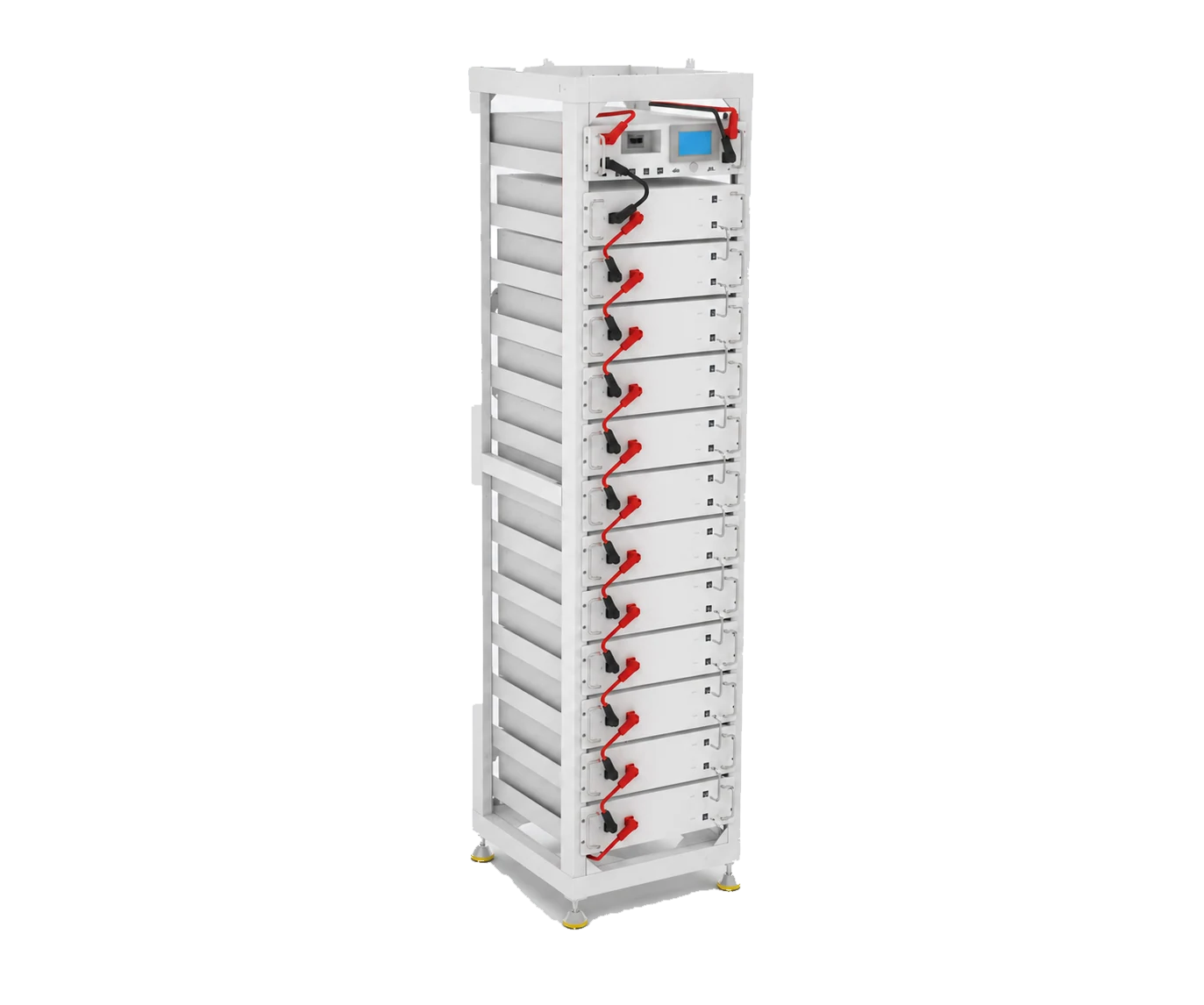
Product overview
Built around the application.
Home energy storage systems allow excess renewable energy to be stored for periods of higher demand or when generation is unavailable. This can reduce grid dependence and increase energy autonomy when the battery, inverter, protection design and load profile are engineered as one system.
The rack-mounted HVB platform packages high-voltage LiFePO4 modules into removable battery trays with a dedicated high-voltage control box. HVB-61K covers five configurations from 40.96 to 61.44 kWh, while the HVB-100K family covers five detailed configurations from 61.44 to 102.4 kWh. Final selection must follow the inverter voltage window, charge and discharge current, communication protocol, installation environment and applicable local standards.
Two removable rack platforms
HVB61K uses 5.12 kWh modules and HVB100K uses 10.24 kWh modules, allowing system voltage and energy to be selected around the inverter operating window.
Multi-cluster expansion
HVB61K supports up to sixteen parallel clusters and up to 1 MWh. Parallel operation, protection coordination and maximum usable capacity require project-specific engineering.
Monitoring and inverter communication
Optional RS485/CAN, screen or PC state-of-charge display, app monitoring, remote diagnosis and OTA functions support system visibility. Final software scope depends on the delivered configuration.
Defined electrical protection
LiFePO4 cells, battery management and fuse protection provide coordinated electrical protection. HVB61K also integrates aerosol fire suppression designed to respond within five seconds; final fire-protection design must follow the delivered system and site code.
Installation-focused architecture
Removable battery trays, a high-voltage control box and quick inter-module connections are designed to simplify assembly and maintenance. Installation and commissioning must still be completed by qualified personnel.
Service life and warranty
Both rack platforms provide more than 5,000 cycles at 25°C, 0.5C and 80% DOD, with a ten-year warranty under the applicable warranty terms.
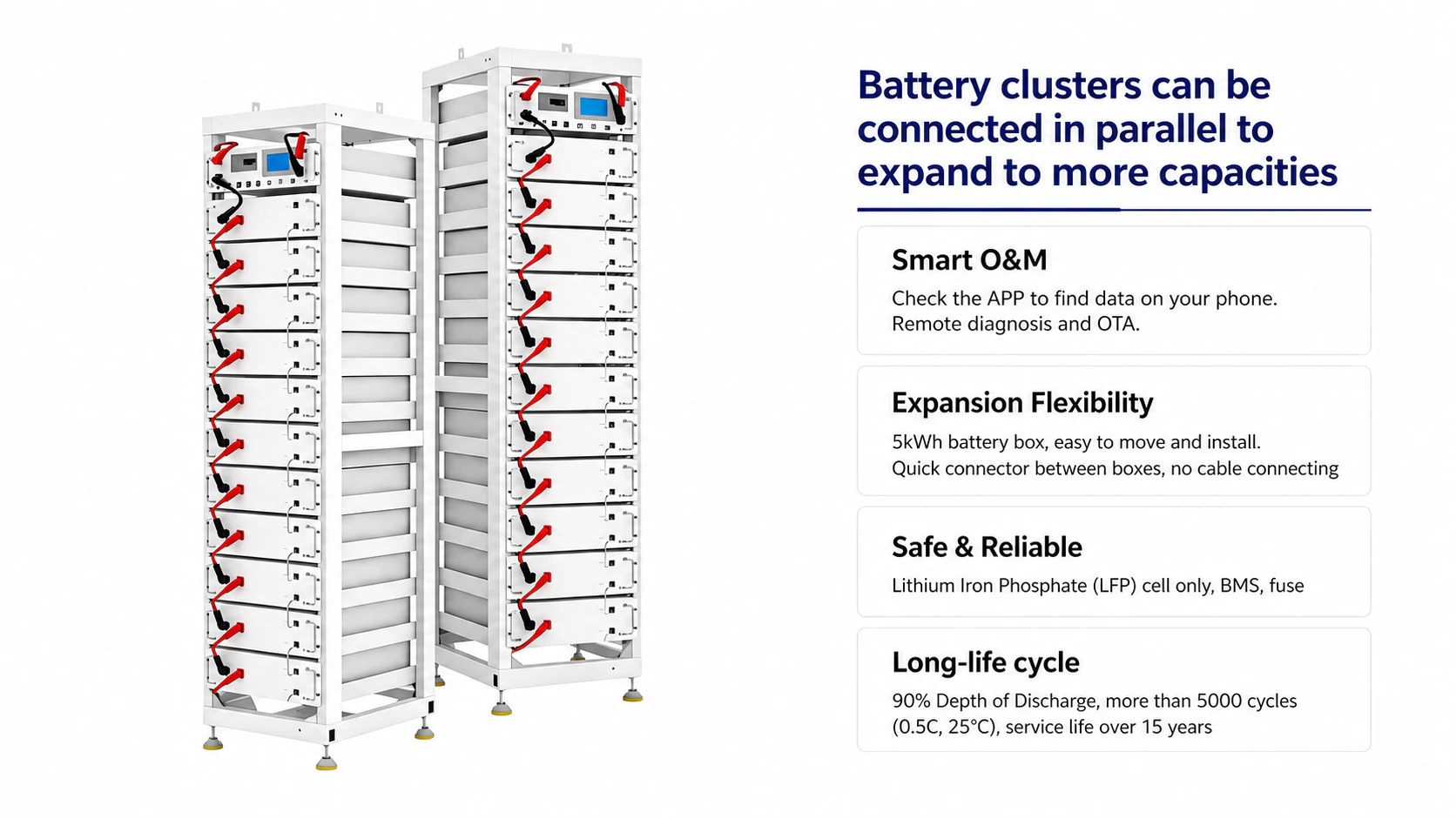
Parallel expansion
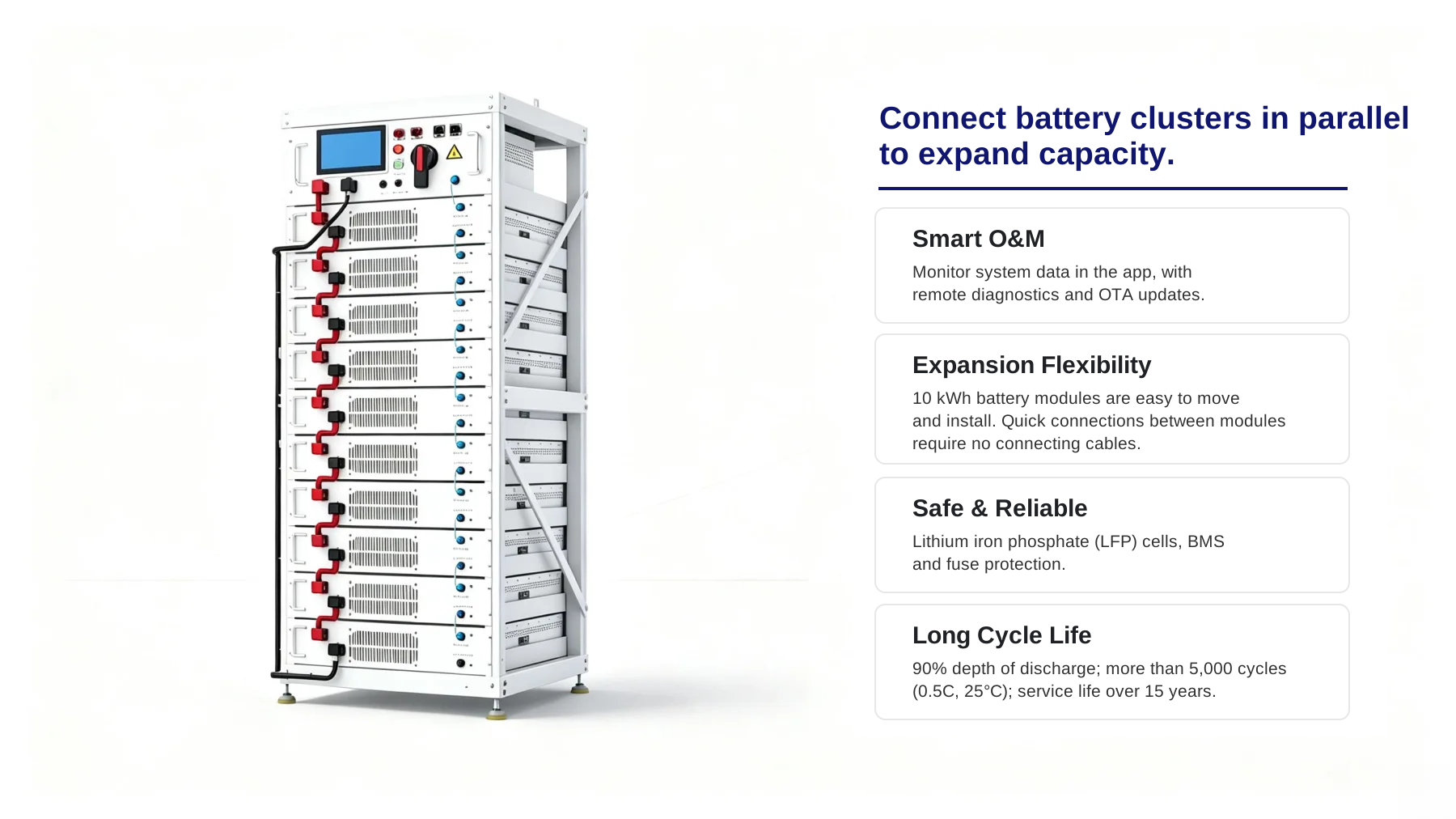
Battery clusters can be connected in parallel to expand capacity.
Smart O&M
App monitoring supports phone-based system data, remote diagnosis and OTA updates.
Expansion flexibility
5.12 kWh removable modules and quick inter-module connections simplify movement, installation and capacity expansion.
Safe and reliable
LiFePO4 cells, BMS and fuse protection form a coordinated electrical safety architecture.
Long cycle life
Designed for 90% DOD, more than 5,000 cycles at 0.5C and 25°C, and service life over fifteen years under suitable operating conditions.
Product features
System advantages
Easy installation
Cable-free connections between modules support plug-and-play assembly.
Long-term reliability
LFP cells support more than 5,000 cycles and are covered by a ten-year warranty.
Module mixing
Compatible modules manufactured within a three-year period can be mixed in one system, subject to compatibility verification.
Fast charge and discharge
Maximum continuous charge and discharge current: 100A.
Cycle life and module mixing depend on operating conditions and compatibility verification. Warranty coverage is ten years under the applicable warranty terms.
Product features
System advantages
Easy installation
Cable-free connections between modules support plug-and-play assembly.
Long-term reliability
LFP cells support more than 5,000 cycles and are covered by a ten-year warranty.
Module mixing
Compatible modules manufactured within a three-year period can be mixed in one system, subject to compatibility verification.
Fast charge and discharge
Maximum continuous charge and discharge current: 200A.
Cycle life and module mixing depend on operating conditions and compatibility verification. Warranty coverage is ten years under the applicable warranty terms.
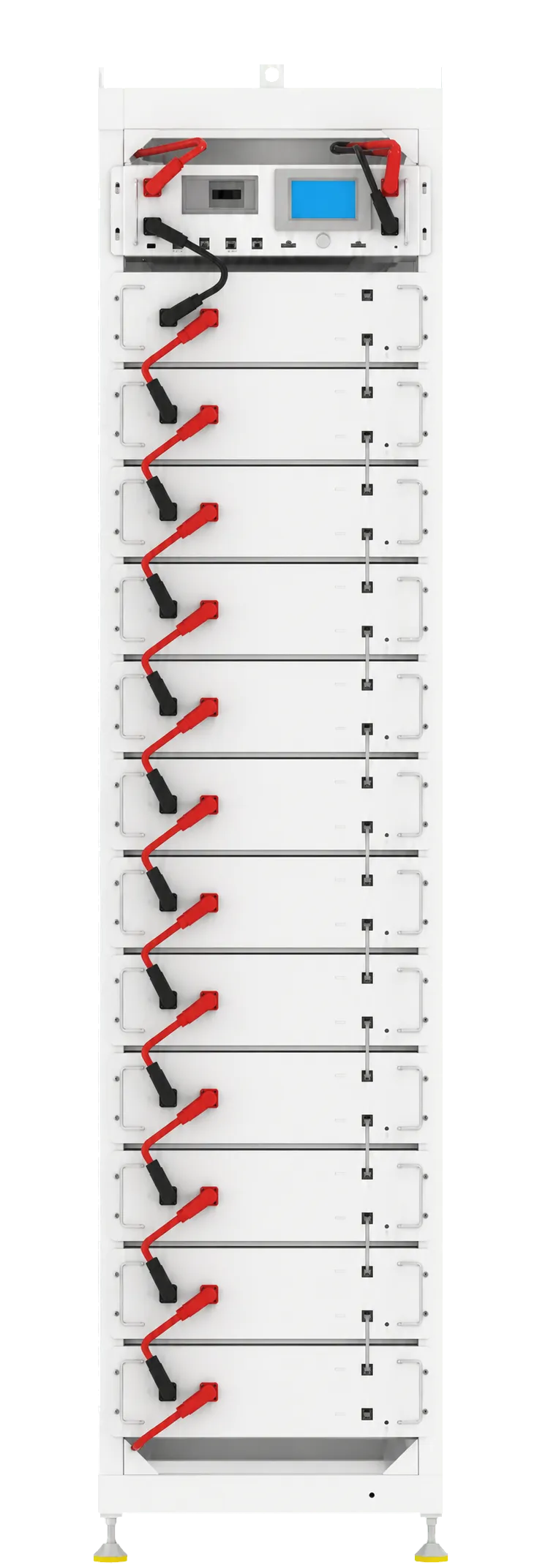
Product views
View the selected model.
Additional product views are shown where available for the selected model.
Product parameters
Model-specific specifications.
Compare the model-specific electrical, mechanical and operating parameters. Final configuration remains subject to application engineering.
Primary product parameters
- Rated energy
- 61.44 kWh
- Battery type
- LiFePO4 lithium battery
- Nominal voltage
- 614.4V
- Nominal capacity
- 100Ah
- Single-module energy
- 5.12 kWh
- Scalable system energy range
- 40–61 kWh per cluster
- Extensible modules
- 8–12 per cluster
- Module weight
- 42 kg
- Maximum continuous charge/discharge current
- 100A
- System weight
- 550 kg
- System dimensions
- 525 × 602 × 2,100 mm
System configurations
- HVB40K · 8 modules
- 40.96 kWh · 409.6V · 320–467V operating range · 50A charge/discharge · 100A maximum continuous · 525 × 1,300 × 602 mm (W×H×D) · approximately 400 kg
- HVB46K · 9 modules
- 46.08 kWh · 460.8V · 360–525V operating range · 50A charge/discharge · 100A maximum continuous · 525 × 1,500 × 602 mm (W×H×D) · approximately 442 kg
- HVB51K · 10 modules
- 51.2 kWh · 512V · 400–584V operating range · 50A charge/discharge · 100A maximum continuous · 525 × 1,700 × 602 mm (W×H×D) · approximately 486 kg
- HVB56K · 11 modules
- 56.32 kWh · 563.2V · 440–642V operating range · 50A charge/discharge · 100A maximum continuous · 525 × 1,900 × 602 mm (W×H×D) · approximately 510 kg
- HVB61K · 12 modules
- 61.44 kWh · 614.4V · 480–700V operating range · 50A charge/discharge · 100A maximum continuous · 525 × 2,100 × 602 mm (W×H×D) · approximately 550 kg
Battery module and high-voltage control box
- Battery module energy
- 5.12 kWh
- Battery module voltage
- 51.2V DC
- Battery module weight
- 43 kg in the detailed table
- Battery module size
- 450 × 132 × 413 mm (W×H×D)
- Control-box rated voltage
- 0–1,000V DC
- Control-box rated current
- 100A maximum
- Control-box weight
- 13.6 kg
- Control-box size
- 450 × 135 × 410 mm (W×H×D)
Operation, protection and monitoring
- Charging temperature
- 0°C to 50°C
- Discharging temperature
- -20°C to 55°C
- Transportation state of charge
- 30%
- Cycle life
- >5,000 cycles at 25°C, 0.5C and 80% DOD
- Operating altitude
- ≤3,000 m
- Ingress protection
- IP20
- Installation
- Removable rack mount
- Rated-capacity test conditions
- 2.5–3.65V cell voltage · 25°C ± 3°C · 0.5C charge and discharge
- Available capacity
- 100Ah
- Communication
- Optional RS485/CAN · compatible with most inverter protocols
- State-of-charge display
- Optional screen or PC software
CE · IEC 62619 · UN38.3 · MSDS
Primary product parameters
- Rated energy
- 100 kWh product class
- Battery type
- LiFePO4 lithium battery
- Nominal voltage
- 512V
- Nominal capacity
- 200Ah
- Single-module energy
- 10.24 kWh
- Scalable system energy range
- 50–100 kWh per cluster
- Extensible modules
- 5–10 per cluster
- Module weight
- 83 kg
- Maximum continuous charge/discharge current
- 200A
- System weight
- 900 kg
- System dimensions
- 550 × 840 × 1,600 mm
System configurations
- HVB60K · 6 modules
- 61.44 kWh · 307.2V · 268–350V operating range · 100A charge/discharge · 200A maximum continuous · 550 × 840 × 1,060 mm (W×H×D) · approximately 568 kg
- HVB70K · 7 modules
- 71.68 kWh · 358.4V · 313–408V operating range · 100A charge/discharge · 200A maximum continuous · 550 × 840 × 1,195 mm (W×H×D) · approximately 651 kg
- HVB80K · 8 modules
- 81.92 kWh · 409.6V · 358–467V operating range · 100A charge/discharge · 200A maximum continuous · 550 × 840 × 1,330 mm (W×H×D) · approximately 734 kg
- HVB90K · 9 modules
- 92.16 kWh · 460.8V · 403–525V operating range · 100A charge/discharge · 200A maximum continuous · 550 × 840 × 1,465 mm (W×H×D) · approximately 817 kg
- HVB100K · 10 modules
- 102.4 kWh · 512V · 448–584V operating range · 100A charge/discharge · 200A maximum continuous · 550 × 840 × 1,600 mm (W×H×D) · approximately 900 kg
Battery module and high-voltage control box
- Battery module energy
- 10.24 kWh
- Battery module voltage
- 51.2V DC
- Battery module weight
- 83 kg
- Battery module size
- 530 × 820 × 135 mm (W×H×D)
- Control-box rated voltage
- 0–1,000V DC
- Control-box rated current
- 200A maximum
- Control-box weight
- 13.6 kg
- Control-box size
- 530 × 600 × 177 mm (W×D×H)
Operation, protection and monitoring
- Charging temperature
- 0°C to 50°C
- Discharging temperature
- -20°C to 55°C
- Transportation state of charge
- 30%
- Cycle life
- >5,000 cycles at 25°C, 0.5C and 80% DOD
- Operating altitude
- ≤3,000 m
- Ingress protection
- IP20
- Installation
- Removable rack mount
- Rated-capacity test conditions
- 2.5–3.65V cell voltage · 25°C ± 3°C · 0.5C charge and discharge
- Available capacity
- 200Ah
- Communication
- Optional RS485/CAN · compatible with most inverter protocols
- State-of-charge display
- Optional screen or PC software
CE · IEC 62619 · UN38.3 · MSDS
Applications
Where this family fits.
Model selection should follow the real load, duty cycle, interface, installation environment and destination-market requirements.
Residential solar self-consumption
Store excess renewable generation for later household demand when the battery, inverter and protection system are engineered together.
Residential backup energy
Configure compatible inverter and rack capacity around priority loads, required runtime and the selected voltage window.
Small commercial energy storage
Use configurable module counts and parallel clusters to match a small-commercial load profile and installation space.
Industrial battery integration
HVB61K supports industrial scenarios and up to sixteen parallel clusters, subject to complete system engineering and site protection design.
Engineering scope
One family, configurable layers.
Product features
- 5.12 kWh or 10.24 kWh removable rack-module platform
- Five system configurations for each rack platform
- Optional RS485/CAN inverter communication
- Optional screen or PC software state-of-charge monitoring
- App monitoring, remote diagnosis and OTA functions
- Compatible module mixing within three years, subject to compatibility confirmation
Customization
- Module count and system voltage
- Parallel cluster configuration
- Inverter communication protocol
- Monitoring interface and compatible system integration